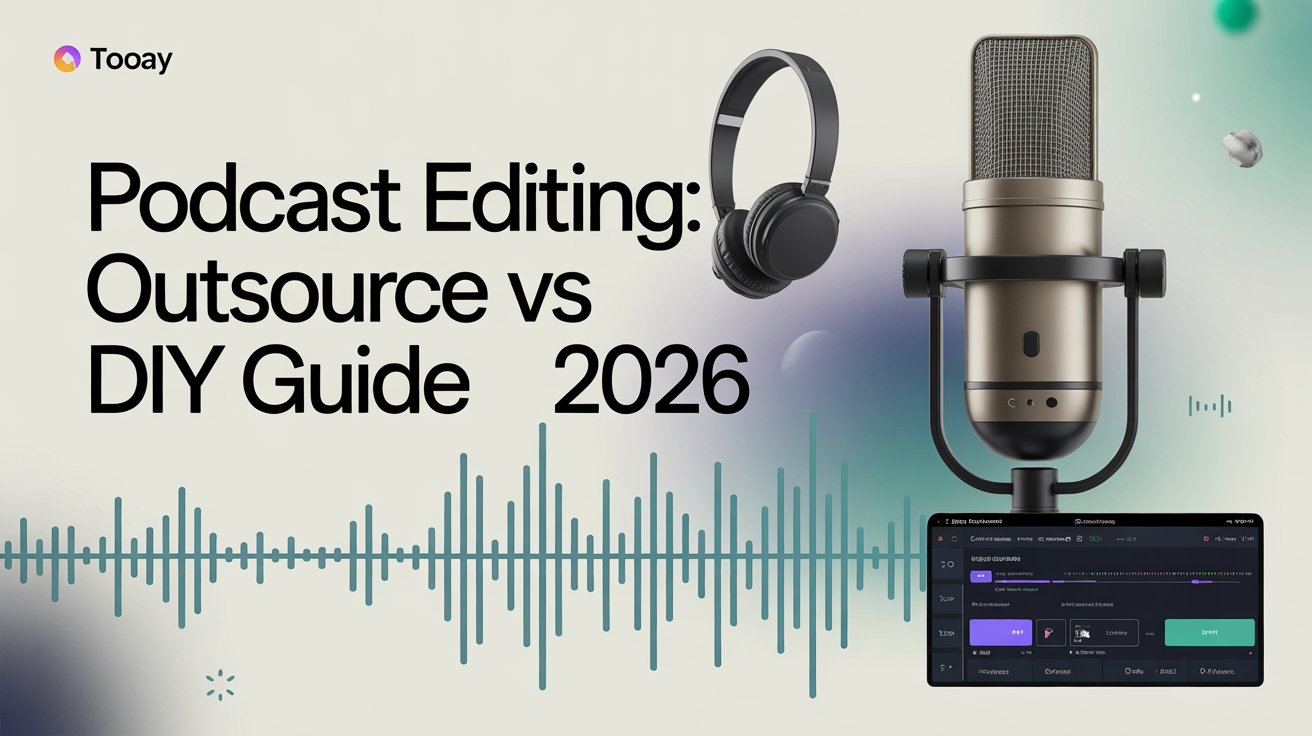


When deciding between DIY podcast editing and outsourcing in 2026, weigh your creative control against the time commitment and quality concerns. DIY editing offers cost savings and personal touch but can be time-consuming and challenging. On the other hand, hiring a professional elevates quality and guarantees timely releases. It’s crucial to evaluate your skill level and budget to make the right choice. Explore further to uncover more insights on optimizing your podcast editing process.
Table of Contents
Key Takeaways
- Evaluate your skill level and time availability to decide between DIY editing or outsourcing for podcast production efficiency.
- Consider the cost-effectiveness of DIY editing against the potential quality and expertise gained from hiring professional editors.
- Assess the benefits of creative control and personal style in DIY editing versus the polished, industry-standard results from outsourcing.
- Factor in deadlines and workload; outsourcing may alleviate pressure and ensure timely episode releases for your podcast.
- Regularly review audio quality metrics and editing techniques to ensure your podcast meets audience expectations, whether edited in-house or professionally.
Understanding Podcast Editing
When you plunge into podcast editing, you’ll quickly realize it’s not just about cutting out mistakes; it’s about enhancing the overall listening experience. A well-defined podcast structure keeps your audience engaged, while effective editing techniques refine your audio storytelling.
Focus on sound design to create an immersive atmosphere that captivates listeners. An efficient editing workflow helps maintain episode pacing, ensuring your content flows smoothly.
Prioritize content organization to highlight key points without losing listener interest. Adopting the right editing mindset allows you to view your work through the listener’s eyes, fostering deeper engagement. Additionally, consider utilizing search functionality to help find relevant resources and tips that can enhance your editing process.
Ultimately, mastering these elements boosts production efficiency, transforming your podcast into a polished, compelling narrative that resonates with your audience.
The DIY Approach: Benefits and Drawbacks
While diving into podcast editing yourself can be rewarding, it comes with its own set of challenges. You gain creative control and can develop your editing skills, but the learning curve can be steep. Consider your time management and resource allocation; it may take longer than anticipated to achieve editing consistency. Additionally, user engagement through various platforms can enhance your visibility and reach.
| DIY Advantages | DIY Challenges | Personal Preference |
|---|---|---|
| Creative control | Steep learning curve | Software selection |
| Cost-effective | Time-consuming | Editing consistency |
| Skill development | Potential frustration | Balancing quality with speed |
Ultimately, weighing these factors will help you decide if the DIY approach is right for you.
Cost Analysis of DIY Editing
Here’s a cost breakdown to evaluate:
- Equipment Investment: High-quality microphones and headphones are essential for good audio.
- Software Options: You’ll need to choose between free or paid editing software that suits your needs.
- Editing Time: Factor in the hours spent editing; it can be a significant commitment, impacting your overall productivity.
- Learning Curve: Acquiring the necessary skills for various audio formats can take time, affecting your project scope.
Additionally, understanding user empowerment through evaluations can further guide your decision-making process.
Quality Considerations in DIY Editing
When you’re editing your podcast, audio clarity is key to keeping your audience engaged.
You’ll need to take into account the capabilities of your editing software and how much time you’re willing to invest for the best results.
Balancing these factors will help guarantee your podcast sounds professional without breaking the bank. Additionally, exploring software solutions can enhance your editing process and improve the overall quality of your podcast.
Audio Clarity Standards
Achieving audio clarity is essential for any podcast, as it directly influences how your content is perceived by listeners.
To guarantee your audio meets clarity standards, consider these key factors:
- Background Noise: Minimize distractions by recording in a quiet environment.
- Volume Levels: Normalize audio levels to balance speech dynamics.
- Audio Enhancement Techniques: Use EQ and compression to improve sound quality.
- Sound Quality Metrics: Regularly check metrics like frequency response and dynamic range.
Editing Software Capabilities
Choosing the right editing software can greatly impact the quality of your podcast, as each program offers different features that can enhance or hinder your audio. You’ll want to evaluate your needs carefully, focusing on audio editing tools that provide a user-friendly interface and advanced features.
Here’s a quick comparison to help you:
| Feature | Software A | Software B |
|---|---|---|
| Pricing Tiers | Free to Premium | Subscription |
| Learning Curve | Low | Moderate |
| Plugin Options | Extensive | Limited |
| Compatibility Issues | None | Occasional |
| Integration Capabilities | High | Moderate |
Time Investment Vs Quality
While you might be enthusiastic to plunge into DIY editing, it’s essential to balance your time investment with the quality of your final product. You want to guarantee your podcast shines, but that requires an understanding of how time efficiency impacts production quality.
Here are four key considerations:
- Editing Skill Level: Your experience can affect how quickly and effectively you edit.
- Software Familiarity: The better you know your editing tools, the faster you’ll work.
- Project Length: Longer episodes naturally demand more of your time.
- Attention to Detail: Balancing speed with thoroughness can greatly influence the final outcome.
Time Commitment for DIY Editing
Editing your podcast can be a time-consuming process, especially if you’re tackling it on your own. You’ll need to allocate significant hours to guarantee quality, which can disrupt your overall time management.
Creating realistic editing timelines is essential. Consider breaking down the editing process into stages, like cutting, polishing, and finalizing. This way, you can better manage your schedule and avoid burnout.
Remember, unexpected challenges might arise, so leave some buffer time. If you’re working with multiple episodes, the time commitment can really add up, making it important to stay organized. Additionally, utilizing project management software can help streamline your editing workflow and enhance productivity.
When to Consider Outsourcing
When you’re facing tight deadlines or just don’t have the time to edit, outsourcing might be the best option.
Assess your editing skills honestly; if you feel overwhelmed or out of your depth, it could save you stress to hire a professional.
Also, consider your budget—sometimes investing in quality editing can elevate your podcast considerably. Additionally, user-friendly navigation can greatly enhance your overall production experience, making it easier to manage tasks efficiently.
Time Constraints and Deadlines
As you juggle multiple projects and deadlines, knowing when to outsource your podcast editing can save you time and stress.
Consider these scenarios where outsourcing might be beneficial:
- Tight Deadlines: If you’re under deadline pressure, outsourcing can guarantee your production timeline stays intact.
- High Editing Pace: When your editing pace isn’t keeping up, an expert can help maintain quality while speeding up turnaround time.
- Workflow Optimization: To enhance your overall workflow, prioritize tasks that require your skills and delegate editing to professionals.
- Scheduling Flexibility: If your project scheduling is tight, outsourcing allows you to focus on content creation while managing your time more effectively.
Implementing these efficiency strategies can help you meet your goals without burning out.
Skill Level Assessment
Evaluating your skill level in podcast editing is crucial for determining whether you should tackle the task yourself or consider outsourcing.
Start with skill identification; honestly assess your editing abilities. Are you comfortable with audio software and techniques like noise reduction and equalization?
Next, conduct an experience evaluation. If you’ve edited a few podcasts and feel confident, you might manage it yourself. However, if you’re new to the process or find it overwhelming, outsourcing could save you time and guarantee a polished final product.
Budget Considerations
Deciding whether to outsource your podcast editing often comes down to budget considerations. You need to evaluate your financial situation and how much time you can dedicate to editing.
Here are some key points to help with your budget breakdown:
- Current Equipment Costs: Factor in the cost of software and hardware needed for DIY editing.
- Time Investment: Consider the hours you’ll spend editing versus the potential earnings from outsourced work.
- Quality Expectations: Assess the quality you want and how it aligns with your budget; professional editors can elevate your podcast.
- Cost Comparison: Determine the cost of outsourcing versus personal editing to see which fits your budget better.
Making informed choices here can save you money and enhance your podcast’s overall quality.
Benefits of Hiring Professional Editors
When you choose to hire professional editors for your podcast, you’re investing in expertise that can elevate your content considerably. Their professional expertise guarantees your audio meets industry standards, while editing consistency assures a polished final product.
You’ll benefit from creative collaboration that enhances your vision, enabling you to focus on what you do best. With their turnaround speed, you can release episodes promptly, keeping your audience engaged.
Professional editors provide audio enhancement that makes your podcast sound crisp and enchanting. They also offer post-production support, guaranteeing every episode aligns with your branding.
Plus, they deliver scalable solutions tailored to your needs, making project management seamless. In short, hiring professionals allows your podcast to shine.
Costs Associated With Outsourcing
While hiring professional editors offers numerous advantages, it’s important to contemplate the costs associated with outsourcing this work. Understanding these expenses can help you determine if it’s a wise long-term investment for your podcast.
- Editing Rates: Professional editors often charge based on experience and expertise, impacting your budget flexibility.
- Skill Specialization: You might pay more for editors who specialize in specific genres or styles, ensuring high-quality results.
- Time Savings: Outsourcing frees up your time to focus on content creation but incurs costs that can add up.
- Resource Allocation: Investing in professional editing can enhance your podcast’s quality assurance, aligning with professional standards.
Evaluating Quality From Professional Editors
When you’re looking at professional editors, it’s essential to assess their editing techniques and how they enhance your podcast.
You’ll want to compare audio quality standards to guarantee your final product meets industry expectations.
Assessing Editing Techniques
Evaluating editing techniques is essential for guaranteeing your podcast meets professional standards. When appraising the work of professional editors, consider the following aspects:
- Editing Styles: Look for a cohesive style that aligns with your podcast’s tone.
- Audio Changes: Check for smooth changes between segments to maintain listener engagement.
- Noise Reduction: Confirm background noise is minimized, enhancing overall sound quality.
- Mixing Strategies: Evaluate how well the different audio elements blend together.
Familiarize yourself with various software features and editing tools that enable efficient editing workflows.
Pay attention to sound design and production techniques, as these contribute greatly to mastering processes. By understanding these elements, you can better appreciate the quality of your podcast’s editing.
Comparing Audio Quality Standards
To guarantee your podcast stands out, it’s essential to compare audio quality standards set by professional editors. High audio fidelity is non-negotiable; it guarantees your content resonates with listener preferences.
Professional sound engineering employs advanced recording techniques and editing styles that enhance clarity and engagement across various podcast formats. Noise reduction is vital for eliminating unwanted sounds, while mastering processes polish your final product, making it ready for distribution.
Finding the Right Editor for Your Podcast
How do you choose the right editor for your podcast among the myriad of options available?
Finding an editor who aligns with your vision is essential. Here are four key factors to take into account:
- Editor Qualifications: Look for experience in podcast editing, familiarity with your genre, and positive testimonials.
- Editing Style: Verify their editing style complements your podcast’s tone—whether it’s polished and professional or casual and conversational.
- Technical Skills: They should be adept with the software and tools necessary for high-quality audio.
- Communication: A good editor will communicate effectively, providing updates and feedback throughout the editing process.
Balancing Costs and Quality
While you want your podcast to sound professional, it’s important to balance costs with quality. Start by evaluating your budget constraints against the market rates for editing services.
Consider the cost efficiency of DIY editing versus outsourcing, weighing the editing precision you can achieve yourself against what professionals offer. Conduct a service comparison to find options that align with your desired production value without breaking the bank.
Think about resource allocation; if you’re stretched thin, investing in quality assurance through skilled editors may yield a better investment return.
Finally, explore scalability options to guarantee your editing process can grow with your podcast. Striking this balance will enhance your podcast’s overall quality while keeping finances in check.
Making the Final Decision: DIY or Outsource?
Deciding whether to handle your podcast editing yourself or hire a professional can be a pivotal moment in your production journey. Here are some factors to evaluate:
- DIY Mindset: Embrace skill enhancement by learning editing techniques yourself.
- Outsourcing Advantages: Benefit from quality assurance and efficiency gains by hiring a professional.
- Editing Goals: Align your approach with your creative control and the level of polish you want.
- Budget Flexibility: Weigh the costs of hiring help against the time management and resource allocation needed for DIY.
Ultimately, assess your editing goals and how each choice fits within your budget and creative vision.
This decision can shape your podcast’s success and your enjoyment of the editing process.
Frequently Asked Questions
What Software Is Best for DIY Podcast Editing?
For DIY podcast editing, you’ll love software like Audacity or Adobe Audition. Both offer powerful audio editing features. When doing a software comparison, consider your budget and ease of use to find the best fit.
How Long Does It Take to Learn Podcast Editing Skills?
It usually takes a few weeks to a couple of months to grasp podcast editing skills, depending on your learning curve and dedication. Regular practice boosts your skill development, making you more proficient over time.
Can I Edit My Podcast on a Smartphone?
Yes, you can edit your podcast on a smartphone! In fact, 60% of podcasters use smartphone apps for editing techniques, making it easier than ever to create quality content on the go.
What Common Mistakes Should I Avoid in DIY Editing?
Avoid poor audio quality by using a good microphone and ensuring proper settings. Don’t skip noise reduction; always check for background sounds. Finally, keep your edits smooth to maintain the flow and feel of your podcast.
How Can I Improve My Podcast Editing Over Time?
To improve your podcast editing over time, focus on enhancing audio quality and experimenting with different editing techniques. You’ll find that practice makes perfect, leading to more polished episodes and a stronger listener connection.
Conclusion
In the end, choosing between DIY podcast editing and outsourcing is like deciding between a cozy night in or a night out on the town. DIY gives you control and creativity but can drain your time and energy, while outsourcing brings expertise and efficiency but at a cost. Weigh your budget against your vision, and remember: the right choice will amplify your podcast’s voice, whether it’s crafted by your own hands or polished by a professional.