
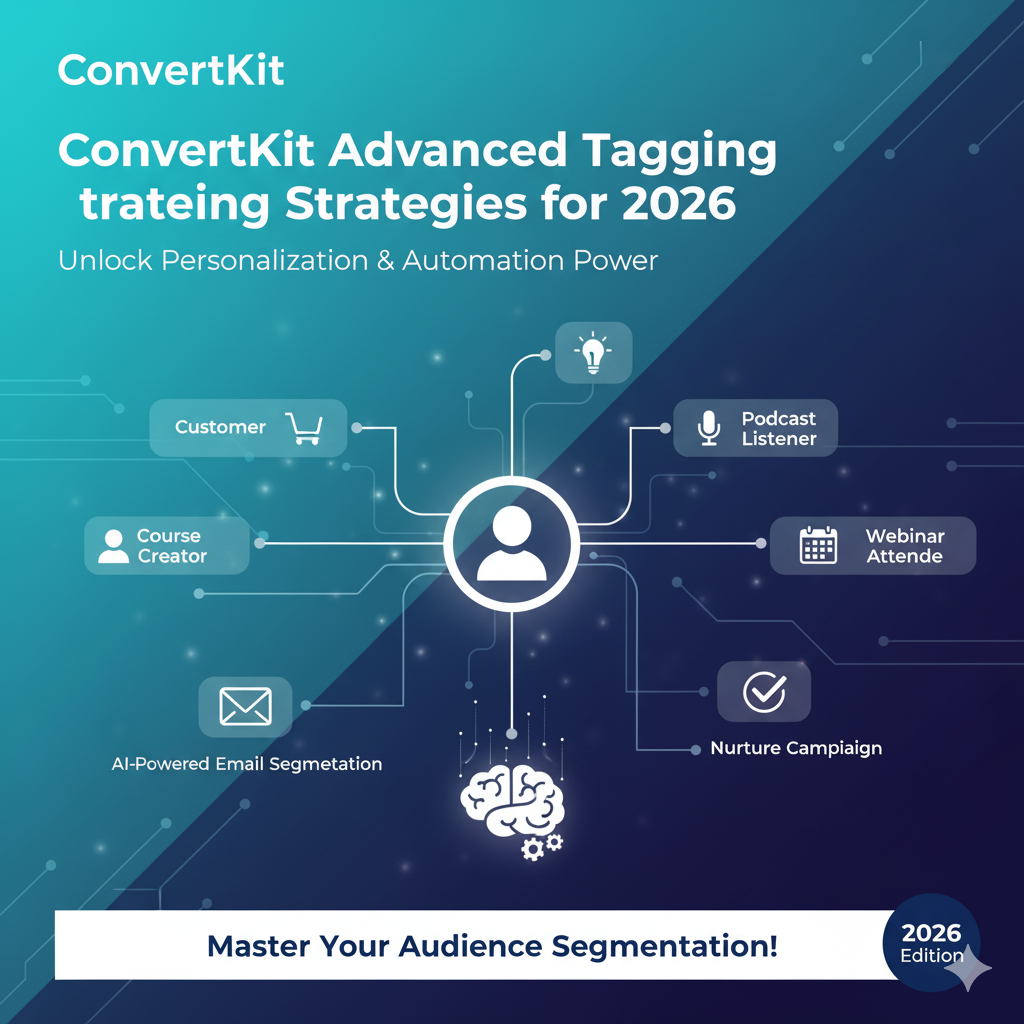


To master advanced tagging strategies in ConvertKit by 2026, focus on audience segmentation and automate tagging processes for efficiency. Build effective structures by organizing tags and utilizing behavioral tagging for personalized content delivery. Track engagement to refine your approach and conduct regular tag maintenance to optimize performance. Adopting future trends like AI ethics and voice integration will also keep your strategies effective. There’s so much more to explore to elevate your email marketing efforts.
Table of Contents
Key Takeaways
- Implement AI-driven tagging strategies to enhance user engagement while ensuring compliance with ethical standards and data privacy.
- Utilize automated tagging based on subscriber behavior to deliver hyper-targeted content that resonates with individual interests and preferences.
- Incorporate voice integration techniques to optimize content for smart speakers, adapting to the growing trend of voice search technology.
- Conduct regular tag audits and cleanup to maintain an organized tagging system, improving efficiency and clarity in subscriber management.
- Develop a robust tagging ontology to define relationships between tags, facilitating better segmentation and personalized communication strategies.
Understanding the Basics of Tagging in ConvertKit
Tagging in ConvertKit is a powerful tool that helps you organize and segment your subscribers effectively.
To get started with tag concepts, think about the specific categories or behaviors that define your audience.
You can create tags based on interests, purchase history, or engagement levels.
The basic setup involves accessing to your subscribers’ section and selecting the tags option.
Here, you can easily add or remove tags for individual subscribers.
This allows you to tailor your communication and make sure your messages resonate with different segments.
The Importance of Audience Segmentation
Audience segmentation is vital for creating targeted content that speaks directly to your subscribers’ needs.
When you understand your audience better, you can enhance engagement strategies and ultimately boost your conversion rates.
Targeted Content Creation
How can you guarantee your content resonates with your subscribers?
By focusing on targeted content creation, you can tailor your messaging to specific audience segments.
This approach not only enhances engagement but also drives loyalty.
Here are three strategies to explore:
- Utilize audience data: Analyze subscriber behavior from social media interactions and podcast scripting to understand their interests.
- Create personalized content: Develop tailored emails that address the unique needs and preferences of different segments.
- Test and iterate: Regularly assess the performance of your content to refine your approach and stay aligned with your audience’s evolving interests.
Enhanced Engagement Strategies
What’s the key to keeping your subscribers engaged? It’s all about effective audience segmentation.
By understanding your subscribers’ interests and preferences, you can create tailored content that resonates with them. This not only fosters community building but also encourages active participation.
One powerful tactic is to use interactive polls. These polls not only gather valuable insights but also make your audience feel involved and valued.
When subscribers see that their opinions matter, they’re more likely to stay engaged with your content.
So, don’t just send generic emails; segment your audience and personalize your approach.
Improved Conversion Rates
Achieving improved conversion rates hinges on effective audience segmentation.
By understanding your audience better, you can tailor your messaging, leading to higher engagement and conversions.
Here’s how you can implement this strategy:
- Use A/B Testing: Experiment with different subject lines, content formats, or calls to action to find out what resonates most with your segmented groups.
- Incorporate Customer Feedback: Regularly collect and analyze feedback to refine your audience segments, ensuring you’re addressing their specific needs.
- Personalize Content: Create targeted content for each segment, making them feel valued and understood.
Creating Effective Tagging Structures
While effective tagging structures can streamline your email marketing efforts, they also enhance your ability to segment and engage your audience.
To create a robust tagging system, start by developing Tag Ontologies that define the relationships between tags.
This helps you understand how different tags interact and can be applied to your contacts.
Next, focus on Schema Design to guarantee your tags are organized logically and intuitively.
Group related tags together and establish a hierarchy that reflects your marketing goals.
By doing this, you’ll find it easier to filter and analyze your audience data, leading to more personalized communication.
Implementing Behavioral Tagging Techniques
When it comes to behavioral tagging, focusing on engagement and purchase history can greatly enhance your email marketing strategy.
By tagging subscribers based on their actions, you can tailor your content and offers to better meet their needs.
This targeted approach not only boosts engagement but also drives conversions.
Tagging Based on Engagement
Tagging based on engagement is a powerful way to enhance your marketing strategy and tailor your messaging to your audience.
By implementing behavioral tagging techniques, you can gain insights into subscriber interactions and preferences.
Here are some effective strategies:
- Feedback Tagging: Use tags to categorize responses from surveys or polls, allowing you to segment based on interests and concerns.
- Event Integration: Connect tags to specific events like webinars or product launches, helping you identify engaged attendees for follow-ups.
- Engagement Scoring: Track interactions like opens and clicks, tagging subscribers based on their activity levels to target your messaging effectively.
Purchase History Tagging
Understanding your subscribers’ purchase history can greatly enhance your marketing efforts.
By tagging based on purchase behavior, you can create targeted campaigns that resonate with specific segments.
For instance, if you identify subscribers who prefer certain payment methods, you can tailor promotions accordingly.
This personalization increases engagement and boosts sales.
Additionally, utilizing purchase history for fraud detection is vital.
By tagging unusual buying patterns or multiple transactions in a short timeframe, you can proactively address potential issues.
This not only protects your business but also builds trust with your customers.
Implementing these strategies guarantees your marketing is data-driven and effective, allowing you to connect with your audience in a meaningful way.
Automating Tagging Processes for Efficiency
Streamlining your email marketing process can greatly enhance your efficiency, especially when it comes to managing tags in ConvertKit.
Automating tagging processes can save you time and guarantee your system runs smoothly.
Here are three strategies you can implement:
- Utilize Cloud Automation: Integrate tools that automatically apply tags based on user behavior or actions.
- Develop Efficiency Scripts: Write simple scripts that update tags in bulk, reducing manual effort and errors.
- Set Up Triggers: Create automated triggers that tag subscribers when they meet specific criteria, like completing a purchase.
Using Tags for Personalized Content Delivery
Automating your tagging processes not only boosts efficiency but also lays the groundwork for delivering personalized content to your subscribers.
By using tags effectively, you can implement Geographic Personalization, tailoring your messages based on where your subscribers live.
This means you can share relevant local events or promotions, enhancing engagement and connection.
Additionally, consider using tags for Seasonal Updates, allowing you to send timely content that resonates with your audience.
For example, you can tag subscribers interested in holiday-themed content, ensuring they receive festive tips or exclusive offers.
This targeted approach not only increases open rates but also strengthens your relationship with subscribers, making them feel valued and understood.
Personalization is key, so leverage tags to create meaningful connections.
Tracking Engagement and Performance With Tags
How do you know if your content is truly resonating with your audience?
By tracking engagement and performance with tags, you can gain valuable insights into how your audience interacts with your content.
Utilizing real-time analytics allows you to see immediate reactions, while predictive insights help forecast future engagement trends.
Here’s how you can maximize your tagging strategy:
- Monitor open and click rates to assess content effectiveness.
- Segment your audience based on tag usage to tailor future communications.
- Analyze subscriber behavior over time to identify patterns and preferences.
Best Practices for Tag Maintenance and Optimization
Tracking engagement with tags offers valuable insights, but to truly leverage that data, you need to maintain and optimize your tagging strategy. Start with regular tag auditing to identify inactive or redundant tags. This helps streamline your workflow and enhances clarity. Next, consider data archiving; move old tags to a separate archive to keep your system organized and functional.
Here’s a quick reference table for tag maintenance:
| Action | Frequency | Purpose |
| Tag Auditing | Monthly | Identify inactive tags |
| Data Archiving | Quarterly | Organize old tags |
| Tag Cleanup | Biannually | Remove duplicates |
| Performance Review | Annually | Assess tag effectiveness |
| Strategy Update | As needed | Adapt to new trends |
Implement these practices for an effective tagging strategy!
Future Trends in Email Marketing and Tagging Strategies
As the landscape of email marketing evolves, what innovative strategies can you adopt to stay ahead? Embracing future trends will keep you competitive. Here are three key strategies to evaluate:
- AI Ethics: Make sure your AI-driven campaigns respect user privacy and data security. Transparency builds trust, which is essential for long-term engagement.
- Voice Integration: With the rise of smart speakers, integrating voice technology into your email strategies can enhance user experience. Think about how your content can be optimized for voice search.
- Personalized Automation: Use advanced tagging to create hyper-targeted content. This approach not only boosts engagement but also helps in segmenting your audience effectively.
Conclusion
In 2026, mastering ConvertKit’s advanced tagging strategies will be your golden ticket to email marketing stardom! Imagine your audience engaging with your content like moths to a flame, all because you’ve perfectly segmented and personalized your messages. With automated tagging processes working tirelessly behind the scenes, you’ll have more time to create dazzling campaigns that skyrocket your engagement. Remember, a well-organized tagging system isn’t just a tool; it’s your secret weapon in the email marketing arena!