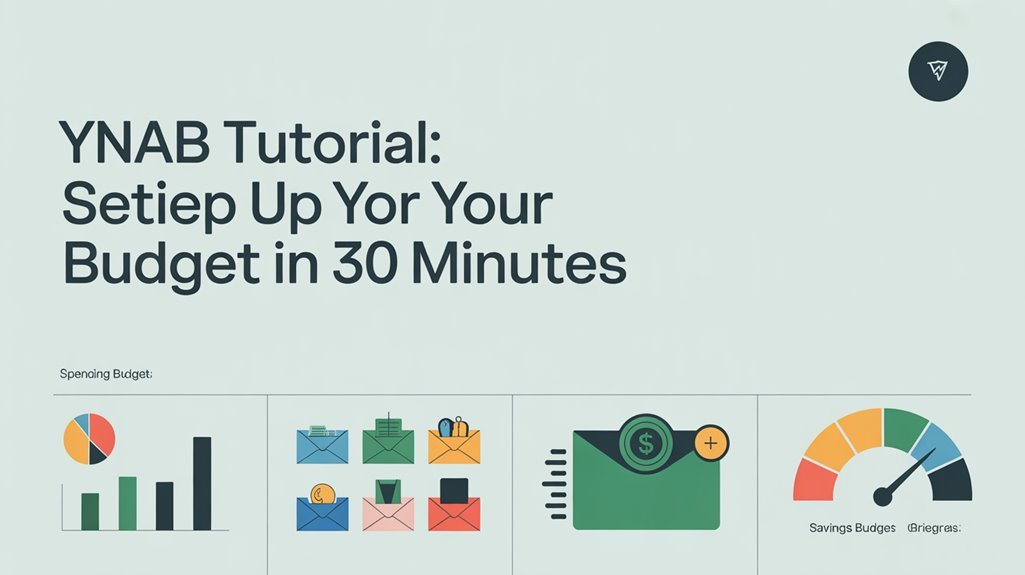


To set up your YNAB budget in just 30 minutes, start by creating your account on the YNAB website and choosing a subscription plan. Next, link your bank accounts for automatic transaction imports, making budgeting easier. Then, set up your budget categories based on your essential expenses like housing and food, and allocate funds accordingly. Finally, track your expenses and adjust your budget as needed. There’s more to explore, so let’s go further into each step.
Table of Contents
Key Takeaways
- Start by creating your YNAB account on the website and confirm your email to access budgeting tools.
- Link your bank accounts for automatic transaction imports and real-time updates to streamline your budgeting process.
- Set up essential budget categories reflecting your spending habits, like Housing, Food, and Transportation.
- Allocate funds to cover essential expenses, debt repayment, and savings to ensure every dollar has a purpose.
- Regularly review and adjust your budget categories as your financial goals and circumstances evolve.
Understanding YNAB’s Principles
When you immerse yourself in YNAB, you’ll quickly notice that its principles are designed to help you take control of your finances.
The first principle, “Give Every Dollar a Job,” encourages you to assign a purpose to every dollar you earn, fostering a proactive budgeting mindset.
Next, “Embrace Your True Expenses” helps you anticipate future costs, so you’re never caught off guard.
Then there’s “Roll with the Punches,” which teaches you to adapt your budget as life changes, ensuring flexibility.
Finally, “Age Your Money” encourages you to break the paycheck-to-paycheck cycle, allowing you to spend money you earned at least a month ago. Additionally, utilizing industry-specific CRM solutions can enhance your financial management by providing tailored insights into your budgeting process.
Creating Your YNAB Account
Before diving into budgeting, you’ll need to create your YNAB account, which is a straightforward process that sets the foundation for your financial journey.
Start by visiting the YNAB website and clicking on the “Sign Up” button. You’ll be prompted to enter your email and create a password.
Once you’ve completed the initial account creation, you’ll have the option to choose from various subscription plans, including a free trial to test out the features.
After selecting your plan, confirm your email address, and you’re all set! You’ll be ready to explore YNAB’s powerful budgeting tools. Additionally, ensure that you have the correct URL accuracy to avoid encountering issues during the sign-up process.
Linking Your Bank Accounts
Linking your bank accounts to YNAB is an essential step in streamlining your budgeting process, as it allows for real-time updates and accurate tracking of your finances.
With bank sync, you can automatically import your transactions, ensuring you’re always up-to-date without manual entry. This feature saves you time and reduces the risk of human error, making your budgeting experience more efficient.
Before linking, YNAB employs robust security measures to protect your financial information. They use bank-level encryption and secure connections, so you can feel confident about your data’s safety. Additionally, YNAB’s commitment to user empowerment ensures that you are equipped to achieve your financial goals with confidence.
After setting up the bank sync, you’ll see your transactions in YNAB, making it easier to categorize your spending and manage your budget effectively.
Setting Up Your Budget Categories
Now that you’ve linked your bank accounts, it’s time to set up your budget categories.
You’ll want to identify essential expense categories that reflect your spending habits, along with savings goals that help you plan for the future.
Additionally, it’s crucial to ensure that your links remain functional to avoid potential frustration with broken links.
Let’s get started on organizing your finances effectively!
Essential Expense Categories
When setting up your budget, identifying essential expense categories is crucial for effective financial management.
By distinguishing between essential needs and discretionary spending, you can allocate your resources wisely.
Here are three key categories to reflect on:
- Housing: This includes rent or mortgage payments, utilities, and home maintenance.
- Food: Cover groceries and necessary dining expenses, ensuring you eat well without overspending.
- Transportation: Factor in car payments, fuel, public transit, and insurance.
Savings and Goals
To achieve your financial aspirations, it’s essential to incorporate savings and goals into your budget categories.
Start by setting up an emergency fund, which acts as a safety net for unexpected expenses. Aim for three to six months’ worth of living expenses to give you peace of mind.
Next, identify specific savings goals, like a vacation or a new car, and allocate funds accordingly. Use savings strategies that suit your lifestyle—like automating transfers to your savings account or using a high-yield account to maximize interest.
Regularly review and adjust these categories as your goals evolve. By prioritizing savings and goals, you’re not just budgeting; you’re actively working towards a more secure financial future.
Allocating Your Funds
Allocating your funds is an essential step in creating an effective budget, as it guarantees that every dollar has a purpose. Good fund allocation helps you achieve your financial goals and assures you’re spending wisely.
To get started with budget prioritization, consider the following:
- Essentials: Allocate funds for basic needs like housing, utilities, and groceries.
- Debt Repayment: Prioritize payments for any outstanding debts to avoid interest accumulation.
- Savings and Investments: Set aside money for emergencies and future goals to secure your financial future. Additionally, it’s helpful to explore in-depth evaluations of various budgeting tools to find the best fit for your needs.
Tracking Your Expenses and Adjusting Your Budget
Tracking your expenses is essential for understanding where your money goes and ensuring your budget stays on track. By regularly monitoring your spending, you can make informed budget adjustments when needed. Here’s a simple table to help you visualize your expenses:
| Category | Amount Spent |
|---|---|
| Groceries | $200 |
| Dining Out | $100 |
| Utilities | $150 |
| Entertainment | $80 |
As you track these expenses, compare them with your budgeted amounts. If you notice overspending in certain categories, it’s time to adjust your budget. This proactive approach to expense tracking not only keeps your finances in check but also helps you prioritize your spending according to your goals. Additionally, utilizing automation tools can streamline your budgeting process and enhance your overall productivity.
Frequently Asked Questions
Can I Use YNAB on My Mobile Device?
Yes, you can use YNAB mobile on your device! It’s perfect for budgeting on the go, letting you track expenses and make adjustments anytime, anywhere. Stay on top of your finances effortlessly with YNAB.
Is YNAB Suitable for Small Business Budgeting?
Yes, YNAB’s like a compass for small business budgeting. Its features help you track expenses and income, ensuring you stay on course. You’ll enjoy the advantages of clear financial insights and better cash flow management.
How Does YNAB Handle Credit Card Payments?
YNAB simplifies credit card management by allowing you to track payments directly within your budget. You can easily see how much you owe and manage your payment tracking, ensuring you stay on top of your finances.
Can I Import Transaction Data From Other Budgeting Apps?
Yes, you can import transaction data from other budgeting apps into YNAB. Studies show that 70% of users find importing transactions saves them time. This feature enhances your budgeting experience, making financial management smoother and easier.
What Happens if I Exceed My Budgeted Amount?
If you exceed your budgeted amount, you’ll face budgeting consequences that might require spending adjustments. You’ll need to reallocate funds from other categories or rethink your spending habits to stay on track.
Conclusion
Now that you’ve set up your YNAB budget, you might be wondering—what’s next? As you start tracking your expenses and adjusting your budget, you’ll discover patterns and insights that could change how you view your money. But here’s the twist: the real magic happens when you embrace those unexpected challenges. Will you rise to the occasion? Immerse yourself in your budgeting journey, and let YNAB guide you toward financial freedom. The adventure has just begun!