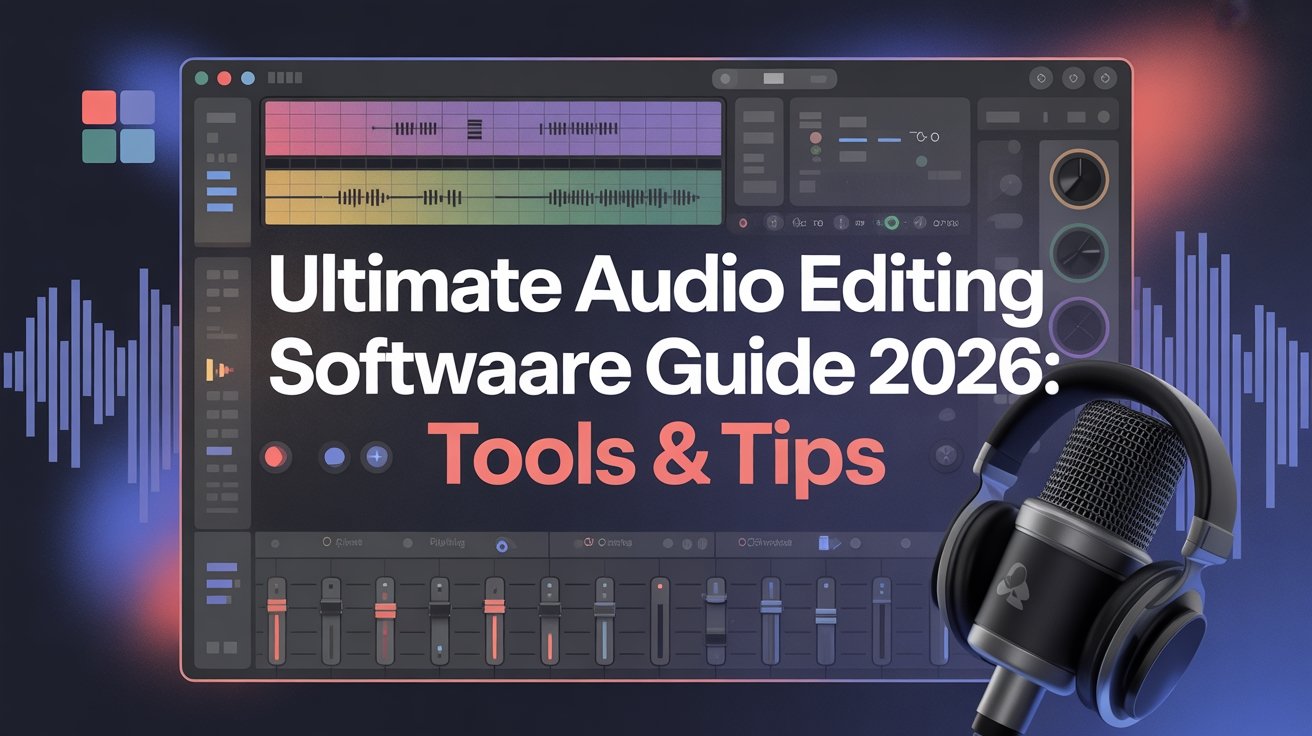


If you’re looking for the ultimate audio editing software guide in 2026, it’s vital to assess your needs first—whether you’re a beginner or a professional. You’ll want user-friendly options or powerful tools based on your editing goals. Don’t forget to compare free and paid options, keeping in mind features like multi-track editing and effects libraries. There’s a lot more to discover about the latest trends and top recommendations for your audio projects.
Table of Contents
Key Takeaways
- Define your audio editing goals to choose the right software, whether for professional production or basic editing tasks.
- Evaluate user-friendly software options for beginners and powerful tools like Pro Tools for advanced users.
- Look for essential features such as multi-track editing, noise reduction, and real-time audio effects in editing software.
- Consider the pros and cons of free versus paid software, including budget, performance, and available support options.
- Seek user feedback and community resources to ensure the software meets your editing needs and enhances your experience.
Understanding Your Audio Editing Needs
What do you want to achieve with your audio editing? Understanding your editing goals is essential for success in various audio project types.
Whether you’re working on podcasts, music tracks, or voiceovers, identifying your objectives helps you streamline your process. For instance, do you want to create a polished final product or just a rough cut to get feedback? Knowing this will guide your editing decisions, from selecting software to applying effects.
If your goal is to enhance sound quality, focus on mastering techniques. Alternatively, if you’re aiming for a creative soundscape, you might explore more experimental edits.
Clarifying your editing goals first sets the stage for a focused and efficient audio project. Additionally, choosing the right tools can significantly impact your productivity and user empowerment throughout the editing process.
Top Audio Editing Software for Beginners
When you’re starting out with audio editing, it’s vital to choose software that’s both user-friendly and packed with essential features.
You’ll want tools that make it easy to cut, mix, and enhance your audio without overwhelming you.
Let’s explore some top options that cater specifically to beginners. Website navigation can also play a significant role in finding the right software for your needs.
Essential Features to Consider
As you immerse yourself in the world of audio editing, it’s crucial to know which features can make your experience smoother and more productive.
First, consider essential compatibility factors; verify the software works seamlessly with your operating system and hardware. This can save you time and frustration.
Next, look for user support options. A responsive support team or a robust community can be invaluable, especially when you encounter challenges or have questions. Tutorials and documentation can also enhance your learning curve.
Finally, think about features like multi-track editing and effects libraries, which can expand your creative possibilities.
User-Friendly Interface Options
Finding the right audio editing software isn’t just about powerful features; it’s also about how easy it’s to navigate the interface.
You’ll want software that offers intuitive navigation and customizable layouts to enhance your editing experience. Here are four key options to evaluate:
- Drag-and-Drop Functionality: Quickly import and arrange audio files without hassle.
- Clear Toolbars: Access essential tools without clutter, making it easier to focus on your project.
- Customizable Workspaces: Tailor the layout to fit your workflow, providing a more personalized editing environment.
- Helpful Tutorials: Look for software that includes built-in guides to help you learn as you go.
Choosing the right interface can make a significant difference in your audio editing journey.
Best Audio Editing Software for Professionals
Whether you’re mixing tracks for a new album or editing podcasts for a growing audience, choosing the right audio editing software can make all the difference in your workflow.
For professionals, software like Pro Tools, Logic Pro X, and Adobe Audition stands out. These platforms offer powerful features tailored for your needs, allowing you to implement advanced editing techniques with ease.
You’ll appreciate their robust functionality, enabling you to manipulate audio with precision. Plus, they support a range of plugins, enhancing your creative options.
Investing in professional audio software means you’ll streamline your projects, elevate your sound quality, and ultimately impress your listeners. Additionally, it’s crucial to ensure effective web navigation tools, as they can significantly enhance your experience while using these software platforms.
Features to Look for in Audio Editing Software
When choosing audio editing software, you’ll want to focus on essential editing tools that suit your needs.
A user-friendly interface is also vital, especially if you’re just getting started.
Let’s explore these features to help you make the right choice. Additionally, consider the importance of website navigation to ensure you can find and utilize all the software’s capabilities effectively.
Essential Editing Tools
As you explore audio editing software, it’s crucial to identify essential editing tools that will enhance your projects.
Look for features that streamline your workflow and elevate your audio quality. Here are four must-have tools:
- Noise Reduction Methods: These help you eliminate unwanted background sounds and improve clarity.
- Multi Track Editing: This allows you to work on various audio tracks simultaneously, making complex projects manageable.
- Real-Time Audio Effects: These let you apply effects on-the-fly, so you can hear changes immediately.
- Equalization Plugins: These tools adjust frequencies, helping you achieve a balanced sound.
With these essential tools, you’ll be well-equipped to tackle audio restoration techniques, mastering software options, and more.
User-Friendly Interface
A user-friendly interface is essential for anyone diving into audio editing software. Look for intuitive controls that enhance your workflow and provide visual feedback on your actions. Customizable layouts can help you tailor the workspace to your needs, while accessibility options guarantee everyone can use the software effectively. Navigation simplicity and responsive design minimize the learning curve, letting you focus on your creative process. Here’s a quick overview of features to evaluate:
| Feature | Importance | Benefit |
|---|---|---|
| Intuitive Controls | Enhances user experience | Faster editing |
| Streamlined Workflow | Increases efficiency | Saves time |
| Customizable Layouts | Personalizes experience | Improves focus |
Comparing Free vs. Paid Audio Editing Software
While both free and paid audio editing software can help you achieve your sound goals, they often come with distinct advantages and limitations. Here’s a quick comparison to evaluate:
- Free Software Advantages:
- No financial investment required.
- Great for beginners or casual users.
- Sufficient for basic editing tasks.
- Community support and resources available.
- Paid Software Benefits:
- Advanced features and tools for professional work.
- Regular updates and customer support.
- Better performance and stability.
- More extensive plugin compatibility.
Ultimately, if you’re just starting out or have a limited budget, free software might be the way to go.
However, if you’re serious about audio editing, investing in paid software can greatly enhance your projects. Additionally, using evaluations can empower users to streamline workflows and make informed decisions about their software choices.
Essential Tools for Podcast Editing
When it comes to podcast editing, having the right tools can make all the difference in producing high-quality audio. Start with a reliable digital audio workstation (DAW) that supports various editing techniques.
Look for features like multi-track editing and noise reduction to enhance your podcast soundscapes. Essential plugins can help you achieve professional-sounding results, so consider tools for compression, equalization, and reverb to add depth to your audio.
Additionally, a good microphone and headphones are vital for capturing and monitoring sound accurately. Don’t forget about organization tools to manage your files and scripts effectively.
Remember, utilizing search functionality can help you locate specific tools or evaluations quickly.
With the right combination of software and hardware, you’ll create engaging podcasts that resonate with your audience.
Music Production Software: A Comprehensive Overview
Podcast editing tools lay a strong foundation for audio production, but if you’re venturing into music creation, the right music production software is key to releasing your creative potential.
Here are four essential features to look for:
- Intuitive Interface: A user-friendly design makes navigation effortless.
- Audio Mixing Capabilities: You’ll want software that allows for seamless audio mixing to perfect your sound.
- Music Collaboration Tools: Look for features that support real-time collaboration with other musicians.
- Virtual Instruments and Effects: A variety of built-in instruments and effects can enhance your projects.
Choosing software that includes these features will elevate your music production experience, enabling you to create and share your compositions with confidence.
Cloud-Based Audio Editing Solutions
Cloud-based audio editing solutions offer you flexibility and convenience, allowing you to work from anywhere with an internet connection.
You’ll find popular tools that not only enhance your editing experience but also facilitate seamless collaboration with others.
With these solutions, you can easily share projects and receive feedback in real-time, transforming your workflow.
Advantages of Cloud Solutions
As you explore your options for audio editing, you’ll find that cloud solutions offer significant advantages.
Here are some key benefits to evaluate:
- Cloud storage benefits: With cloud solutions, you can store and access your projects from anywhere, freeing up local storage and enhancing your workflow.
- Remote collaboration advantages: You can easily collaborate with team members in real-time, regardless of location, streamlining the editing process.
- Automatic updates: Cloud-based tools often update automatically, ensuring you always have access to the latest features without hassle.
- Cost-effective: Many cloud solutions are subscription-based, allowing you to pay only for what you need, making it easier to manage your budget.
These advantages make cloud solutions a compelling choice for modern audio editing.
Popular Cloud Editing Tools
When you’re looking for effective audio editing solutions, several popular cloud editing tools stand out for their robust features and user-friendly interfaces.
Tools like Soundtrap and BandLab offer strong cloud editing advantages, enabling you to edit and mix audio directly in your browser. You can access your projects from any device, making it convenient to work on-the-go.
These platforms also excel in cloud storage integration, ensuring your files are securely stored and easily accessible. Plus, they often come with built-in collaboration features, allowing you to share your work effortlessly.
With intuitive interfaces and powerful editing capabilities, these cloud-based tools can elevate your audio editing experience, making it easier than ever to produce high-quality sound.
Collaboration in Audio Editing
Collaboration in audio editing becomes seamless with the right cloud-based solutions, allowing you to work alongside others regardless of location.
You can enhance your remote collaboration by focusing on these key features:
- Team Workflows: Streamline processes for efficient project management.
- Feedback Integration: Quickly gather and implement feedback, ensuring everyone’s voice is heard.
- Version Control: Keep track of edits and changes, making it easy to revert if necessary.
- Audio File Sharing: Effortlessly share large files with your team, enabling collaborative editing without hassle.
With effective online communication tools, you can maintain clarity and cohesion throughout your project, ensuring that all members are aligned and productive.
Embrace these solutions to elevate your audio editing experience!
Best Software for Sound Design and Effects
Choosing the right software for sound design and effects can transform your audio projects.
You’ll want to explore platforms like Ableton Live, which excels in real-time sound manipulation, making it perfect for experimenting with sound design techniques.
Logic Pro offers a robust suite of audio effects plugins, enhancing your creative possibilities.
If you’re looking for something user-friendly, FL Studio provides a straightforward interface combined with powerful sound design capabilities.
For more experimental projects, consider Max for Live, which allows you to create custom effects and instruments.
Each of these tools can elevate your sound design, helping you craft unique audio experiences that stand out.
Immerse yourself in these options, and you’ll find the perfect fit for your creative vision.
Tips for Choosing the Right Audio Editing Software
As you explore audio editing software options, it’s important to take into account your specific needs and workflow.
Here are some tips to help you choose the right software for your projects:
- Audio Software Compatibility: Verify the software works with your operating system and integrates well with your other tools.
- Editing Workflow Efficiency: Look for features that streamline your process, like customizable shortcuts and batch processing.
- User Interface: A clean, intuitive interface can greatly enhance your editing experience.
- Support and Updates: Opt for software that offers robust customer support and regular updates to keep up with industry changes.
Future Trends in Audio Editing Technology
While technology continues to evolve, audio editing software is set to undergo significant transformations that will boost creativity and efficiency.
You’ll see AI integration powering machine learning algorithms, making editing more intuitive. Imagine creating immersive soundscapes effortlessly as automation tools streamline your workflow.
Real-time collaboration will allow you and your team to work together seamlessly, regardless of location. With mobile editing capabilities, you can refine your projects on-the-go, while adaptive interfaces will cater to your personal preferences.
Virtual reality audio will elevate your projects, inviting listeners into a fully immersive experience. Finally, enhanced accessibility and blockchain technology will guarantee that everyone can enjoy and protect their creative work.
Embrace these trends, and you’ll elevate your audio editing process to new heights.
User Reviews and Recommendations
When it comes to selecting the right audio editing software, user reviews and recommendations can be invaluable resources. They offer insights into real user experiences that you won’t find in marketing materials.
To help you navigate through your options, consider these key points:
- Ease of Use: Look for software that users praise for intuitive interfaces.
- Features: Identify which features are frequently highlighted in comparisons.
- Support: Check if users recommend software based on responsive customer service.
- Pricing: Consider user feedback on value for money and subscription options.
Frequently Asked Questions
Can I Use Audio Editing Software on Multiple Devices?
Yes, you can use audio editing software on multiple devices, provided it has cross-platform compatibility. Just check the software licensing terms to verify you’re allowed to install it on different devices without extra fees.
What Are Common Audio File Formats Supported?
Around 80% of audio files you’ll encounter are in popular formats like WAV, MP3 codec, AIFF, FLAC compression, OGG, and M4A. These formats guarantee compatibility across devices and maintain audio quality.
Is There a Trial Version for Most Audio Editing Software?
Yes, most audio editing software offers trial versions, but they often come with limitations. When you explore software comparisons, you’ll find features and restrictions vary, so you can choose the best fit for your needs.
How Do I Transfer Projects Between Different Audio Editing Software?
To transfer projects between audio editing software, check for project compatibility and export your files in universal formats like WAV or OGG. Use software integration tools or plugins to streamline the process and avoid data loss.
Are There Audio Editing Software Options for Mobile Devices?
Yes, there’re several audio editing software options for mobile devices. While desktop versions offer extensive features, mobile editing apps provide essential tools, intuitive interfaces, and unique app features, making audio editing on-the-go both convenient and powerful.
Conclusion
In a world where your audio dreams can soar to unimaginable heights, choosing the perfect editing software is like finding a magic wand! Whether you’re a beginner or a seasoned pro, the right tools can transform your sound from ordinary to extraordinary in seconds. So, plunge into the options, embrace the tech, and let your creativity explode! With the right software in hand, you’ll be crafting audio masterpieces that even the gods of sound would envy!