
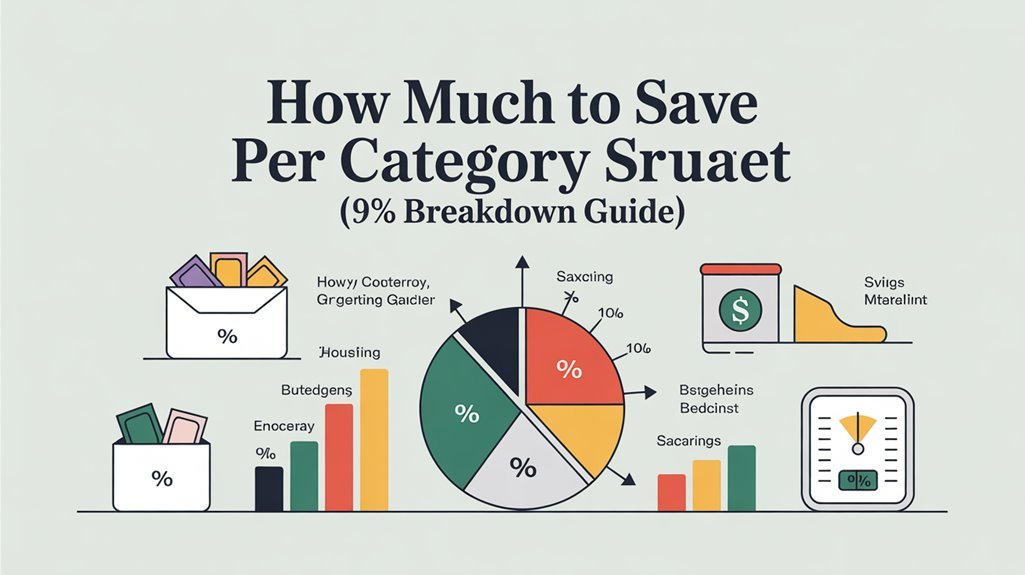


To save effectively, consider this breakdown: allocate 20% for your emergency fund, 15% for retirement savings, and 10% for short-term goals. Devote 10% for debt repayment, 5% for health savings, and 10% for a travel fund. Set aside 5% for home maintenance and 5% for charitable giving. The remaining 10% can cover miscellaneous expenses or opportunities. Want to know how to manage each category effectively? There’s plenty more to discover ahead!
Table of Contents
Key Takeaways
- Aim to save 20% of your income: 10% for retirement, 5% for emergencies, and 5% for short-term savings or travel.
- Allocate 15% of your income towards debt repayment, prioritizing high-interest debts first.
- Set aside 10% for health savings to cover medical expenses and long-term care costs.
- Budget 5% for education funding, utilizing 529 plans and scholarships to reduce future debt.
- Dedicate 5% for charitable giving to support causes aligned with your values and enhance social responsibility.
Emergency Fund: Prioritizing Your Safety Net
While life can be unpredictable, having an emergency fund gives you peace of mind and financial security. It’s essential to prioritize building this safety net, as it serves as a buffer against unexpected expenses.
Start by setting aside three to six months’ worth of living expenses. To enhance your emergency preparedness strategies, automate your savings and make it a non-negotiable line in your budget. This way, you’re consistently contributing to your fund without even thinking about it.
Consider keeping the money in a separate, easily accessible account to avoid temptation. Remember, these financial safety tips can help you navigate life’s uncertainties, ensuring you’re prepared for whatever comes your way without incurring debt or stress. Additionally, having a reliable project management software can help you better organize your finances and track your savings goals.
Retirement Savings: Planning for Your Future
When it comes to your future, retirement savings are essential. You should aim to set aside a percentage of your income to build a solid nest egg. Let’s explore the ideal savings rate and the investment options that can help you reach your retirement goals. Additionally, utilizing effective tools can significantly enhance your savings strategy and overall financial planning.
Importance of Retirement Savings
As you navigate your financial journey, prioritizing retirement savings is vital for securing your future. By investing in retirement accounts, you not only prepare for the years ahead but also release significant savings benefits.
Here are three reasons why you should focus on retirement savings:
- Financial Security: Building a nest egg guarantees you can live comfortably without relying solely on Social Security.
- Tax Advantages: Many retirement accounts offer tax-deferred growth, allowing your investments to compound without immediate tax implications.
- Peace of Mind: Knowing you’re saving for retirement reduces stress, allowing you to enjoy your current lifestyle while planning for the future.
Incorporating retirement savings into your financial strategy is an important step towards a stable and fulfilling retirement.
Ideal Savings Percentage
Determining the ideal savings percentage for your retirement can greatly impact your financial future. A well-thought-out percentage allocation helps guarantee you have enough funds when you retire. While the general recommendation is to save at least 15% of your income, individual circumstances may vary.
Here’s a simple breakdown to guide your ideal savings percentage:
| Age Range | Recommended Savings (%) |
|---|---|
| 20-30 | 10-15 |
| 30-40 | 15-20 |
| 40-50 | 20-25 |
| 50+ | 25-30 |
Adjust your contributions based on your financial goals and lifestyle. Remember, starting early is vital for maximizing your retirement savings. Take control of your future by setting a realistic ideal savings percentage today!
Investment Options Overview
Understanding your investment options is essential for effective retirement savings planning.
To maximize your growth potential and minimize investment risks, consider these key strategies:
- Asset Allocation: Spread your investments across various asset classes to balance risk and return based on your risk tolerance and investment horizon.
- Diversification Strategies: Invest in a mix of stocks, bonds, and other assets to reduce the impact of market trends on your portfolio.
- Passive Income: Explore options like dividend-paying stocks or real estate investments to create consistent income streams in retirement.
Short-Term Savings: Goals and Aspirations
When it comes to short-term savings, you need to define your goals clearly.
Whether it’s a vacation, a new gadget, or an emergency fund, knowing what you’re saving for helps you allocate your savings effectively.
Let’s explore how to set those goals and make the most of your savings strategy. It’s essential to utilize effective tools for data-driven decision making to ensure your savings are optimized for your specific objectives.
Defining Short-Term Goals
How can you effectively define your short-term savings goals? Start by identifying your short term priorities and what you hope to achieve in the near future. This will make the goal-setting process smoother and more focused.
Here are three steps to evaluate:
- List specific goals: Think about what you want to save for, like a vacation, a new gadget, or emergency funds.
- Set a timeline: Decide when you want to achieve these goals—within six months, a year, or another timeframe.
- Determine your budget: Figure out how much you need to save each month to reach your goals.
Allocating Savings Effectively
To allocate your savings effectively, you’ll need to prioritize your short-term goals and break them down into manageable steps.
Start by identifying your savings priorities—whether it’s a vacation, emergency fund, or a new gadget. Once you’ve set your goals, create a timeline for achieving them. This helps you determine how much you need to save each month.
Don’t forget to make budget adjustments; track your spending and see where you can cut back to funnel more into your savings. Regularly review your progress and adjust your approach as needed.
Debt Repayment: Tackling Obligations
Although managing debt can feel overwhelming, tackling your obligations head-on is essential for achieving financial stability.
To effectively implement debt management strategies, focus on prioritizing your financial obligations. Here’s how you can start:
- List Your Debts: Write down all your debts, including amounts and interest rates. This clarity helps you see what you owe.
- Prioritize Payments: Focus on high-interest debts first. This strategy minimizes the overall interest you’ll pay over time.
- Create a Budget: Allocate a specific percentage of your income towards debt repayment. Stick to this budget to stay on track. Additionally, utilizing project management software can aid in organizing your repayment plan efficiently.
Health Savings: Preparing for Medical Expenses
Managing your finances isn’t just about repaying debts; it also involves preparing for future expenses, particularly healthcare costs. Investing in health savings accounts can help you cover out-of-pocket expenses for medical emergencies and unexpected illnesses.
Make sure you have adequate health insurance to reduce your financial burden during tough times. Additionally, prioritize preventive care by participating in wellness programs, which can save you money in the long run.
It’s also wise to plan for long-term care, as these costs can escalate quickly. By setting aside a percentage of your income for health savings, you’ll be better equipped to face medical expenses and keep your financial health in check. Furthermore, utilizing analytics features can aid in better decision-making regarding your health savings strategy.
Education Fund: Investing in Knowledge
When it comes to planning for your future, education funding plays a vital role. Investing in knowledge not only enhances your skills but also opens doors to better opportunities. Let’s explore some effective savings strategies to help you build a robust education fund. Additionally, understanding the importance of copyright can help you protect your intellectual property as you invest in your education.
Importance of Education Funding
Education funding plays an essential role in shaping the future, as it directly impacts the quality of learning and resources available to students.
When you prioritize education funding, you unlock various opportunities that can ease education costs and enhance financial literacy.
Here are three key benefits:
- Scholarship Opportunities: With proper funding, you can access more scholarships, reducing reliance on student loans.
- Quality Resources: Increased funding means better textbooks, technology, and extracurricular activities that enrich the learning experience.
- Financial Literacy: Education funding can support programs that teach budgeting techniques and saving strategies, preparing students for financial independence.
Savings Strategies for Education
Building a solid education fund is essential for investing in your future and achieving financial independence. Start with tuition planning by estimating college costs and factoring in potential scholarship options and financial aid.
You’ll want to explore various education savings accounts, such as 529 plans, which offer tax benefits that can greatly enhance your savings. Incorporate solid budgeting strategies to allocate funds regularly, ensuring you’re prepared for unexpected expenses.
Consider opening investment accounts to grow your savings over time, as student loans can burden your finances later. Monitor your progress and adjust as needed.
Travel Fund: Making Memories
As you plan your next adventure, setting aside money for a travel fund can transform your dream getaway into a reality.
Whether you’re looking to experience adventures in far-off lands or enjoy budget trips close to home, every dollar counts.
Here are three tips to help you build that fund:
- Set a Monthly Goal: Decide how much you want to save each month, making it manageable and consistent.
- Cut Unnecessary Expenses: Identify areas in your budget where you can trim costs and redirect those savings to your travel fund.
- Use Windfalls Wisely: When you receive unexpected money, like bonuses or tax refunds, consider adding a portion to your travel fund.
With a solid plan, those memories are just a trip away!
Home Maintenance: Protecting Your Investment
While planning your next getaway can be exciting, it’s equally important to focus on maintaining your home. Regular routine inspections and seasonal maintenance can prevent costly emergency repairs down the line.
Consider investing in home upgrades that enhance energy efficiency, which not only lowers bills but also boosts your property valuation. Engage in DIY projects to improve safety or tackle pest control issues effectively.
Don’t underestimate the impact of a well-kept landscaping investment; it adds curb appeal and value. By prioritizing these aspects, you guarantee your home remains a safe haven and a smart financial investment.
Charitable Giving: Supporting Causes You Care About
When you choose to give to charities, you’re not just supporting causes you care about; you’re also making a meaningful impact in your community and beyond.
To maximize your charity impact and align with your values, consider these three strategies:
- Set a Percentage: Allocate a specific percentage of your income for ethical donations, ensuring consistent support for causes that resonate with you.
- Engage in Fundraising Events: Participate in local events that raise funds and offer volunteer opportunities, fostering community support while deepening your connections.
- Connect with Donor Engagement: Stay informed about how your contributions are used, enhancing your sense of social responsibility and cause alignment.
Miscellaneous Savings: Unexpected Expenses and Opportunities
Charitable giving can often lead to unexpected expenses or opportunities that require financial flexibility. To handle these situations, it’s essential to maintain a miscellaneous savings category. This allows you to cover unexpected expenses, like urgent repairs or medical bills, without derailing your budget.
Additionally, setting aside a portion of your income for an opportunity fund can empower you to seize chances that come your way, whether it’s an investment opportunity or a spontaneous trip. Aim to save about 5-10% of your income in this category.
Frequently Asked Questions
What Percentage of Income Should I Save for Retirement?
You should aim to save at least 15% of your income for retirement. Focus on diverse investment strategies to maximize your retirement savings, ensuring you’re well-prepared for a financially secure future.
How Can I Determine My Ideal Emergency Fund Amount?
If you think an emergency fund’s just for rainy days, you’re mistaken! Aim for three to six months of expenses, ensuring financial security. After all, life’s surprises aren’t always as cheerful as a sunny day!
Should I Prioritize Debt Repayment or Savings?
You should prioritize debt repayment first. A solid debt strategy reduces interest costs, freeing up funds for savings later. Once your debts are manageable, focus on building your savings balance for future security.
What’s a Reasonable Savings Goal for Travel Each Year?
Did you know that 68% of Americans travel on a budget? Aim to save at least 10-15% of your income annually for travel. Use smart saving strategies to make those dream trips a reality!
How Often Should I Reassess My Savings Categories?
You should reassess your savings categories at least twice a year. Regularly checking your financial goals helps you make necessary category adjustments and guarantees your savings frequency aligns with your current priorities and lifestyle changes.
Conclusion
In the symphony of financial stability, each category plays an essential note, harmonizing your goals and dreams. By allocating your savings wisely, you’re not just building a safety net; you’re crafting a tapestry of security and opportunity. Remember, it’s all about balance—like a tightrope walker gracefully maneuvering the heights of your aspirations. So, take a deep breath, embrace the journey, and watch your financial dreams flourish as you invest in your future with intention.