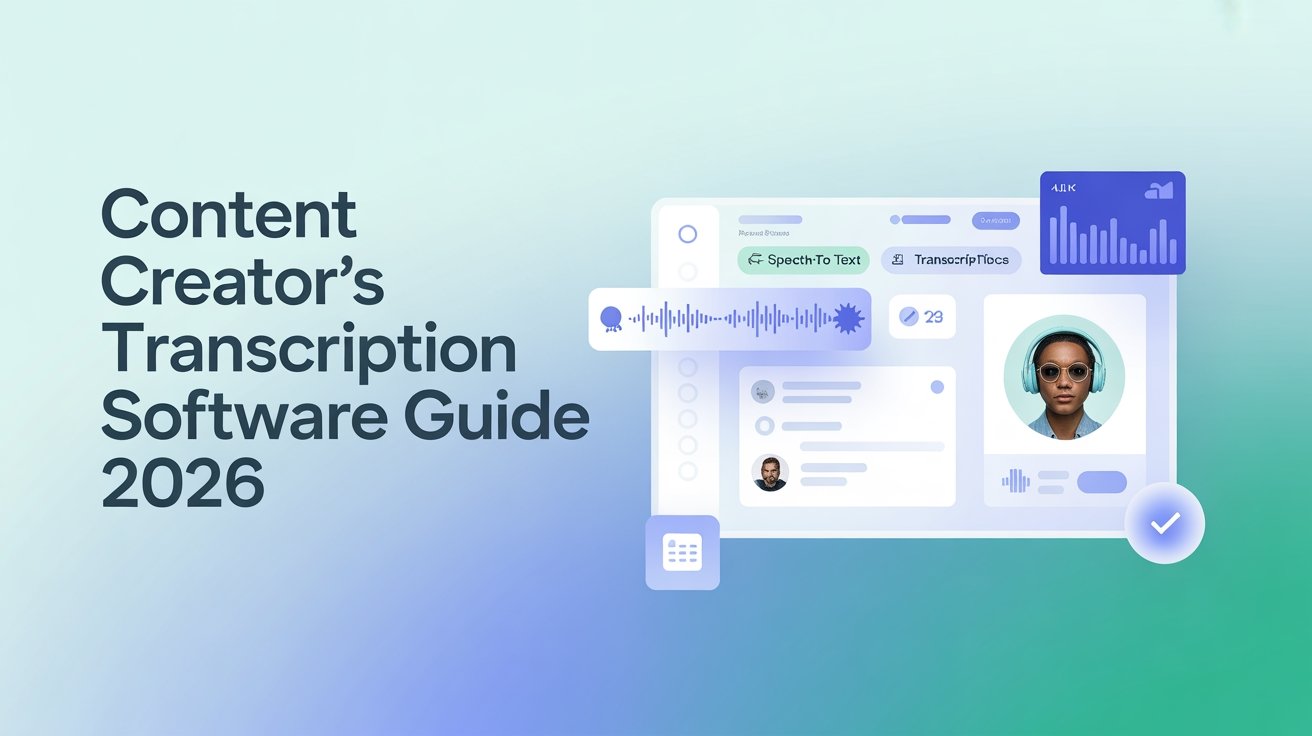


As a content creator in 2026, you need transcription software that enhances your workflow. Look for robust accuracy, user-friendly interfaces, and support for various audio formats. Top choices like Otter.ai or Descript offer real-time transcriptions and editing features. Consider whether automated or manual services fit your needs better. Integrating these tools with platforms like Adobe Premiere Pro can streamline your process. There’s plenty more to explore about maximizing your transcription efforts for better content creation.
Table of Contents
Key Takeaways
- Utilize transcription software like Otter.ai and Rev for accurate, real-time results, tailored for content creators’ needs.
- Consider the pros and cons of automated versus manual transcription services to choose the best fit for your projects.
- Explore integration options with popular editing tools to streamline your content creation workflow.
- Set clear goals and organize files to enhance efficiency and maintain focus during transcription projects.
- Leverage customizable settings and reliable customer support to optimize your transcription experience and resolve issues quickly.
Key Features to Look for in Transcription Software
When searching for transcription software, what key features should you prioritize? First, look for software with robust accuracy metrics. You want a tool that delivers precise transcriptions, minimizing errors that could disrupt your content.
Next, consider the user interface. An intuitive and user-friendly design will make your experience smoother, allowing you to focus on creating rather than maneuvering complicated menus.
Additionally, check for features like customizable settings and support for various audio formats, which can enhance your workflow.
Finally, confirm the software offers reliable customer support in case you encounter any issues. By prioritizing these features, you’ll find a transcription solution that meets your needs and helps streamline your content creation process. Furthermore, evaluations empower users to streamline workflows and make informed decisions about their tools.
Top Transcription Software Options for 2026
As you explore the best transcription software options for 2026, you’ll find a range of innovative tools designed to enhance your content creation process.
Leading the pack are platforms like Otter.ai and Rev, both harnessing AI advancements to deliver accurate, real-time transcriptions. These tools not only save you time but also improve your workflow efficiency.
Another contender is Descript, which offers seamless audio editing alongside transcription features.
Don’t overlook user reviews—these can provide invaluable insights into each software’s performance and user experience.
Whether you’re a podcaster, a video creator, or a student, the right transcription software can greatly streamline your projects, allowing you to focus on what matters most: creating great content. Additionally, if you encounter any issues, remember that navigational errors can occur, so it’s essential to check alternative resources to find the information you need.
Comparing Automated vs. Manual Transcription Services
Choosing the right transcription method can greatly impact your content creation process. You need to weigh the benefits of automated versus manual transcription services carefully.
Here’s a quick comparison to help you decide:
- Accuracy Comparison: Manual transcriptions usually provide higher accuracy than automated services, especially with complex dialogue.
- Cost Analysis: Automated services are often cheaper upfront, while manual services can be more expensive but may save time in the long run.
- Turnaround Time: Automated transcription delivers results almost instantly, while manual options may take longer.
- Editing Needs: Automated transcriptions often require more editing, whereas manual transcriptions are typically cleaner and ready for use.
Additionally, evaluations aim to empower users in decision-making, so consider these factors to choose the best method for your needs.
Integration With Popular Content Creation Tools
Integrating transcription software with your favorite content creation tools streamlines your workflow and enhances productivity. By using transcription APIs, you can seamlessly connect your software to editing platforms like Adobe Premiere Pro or Final Cut Pro, enabling you to automatically import transcripts into your projects. This saves you time and reduces the hassle of switching between applications.
Moreover, many transcription services offer plugins or direct integrations, allowing you to work within your chosen editing environment without interruption. You’ll find that having transcripts readily accessible not only aids in editing but also guarantees your content is more accessible to diverse audiences. Furthermore, ensuring that your links are functional helps to mitigate user frustration with broken links and enhances the overall user experience. Embrace these integrations to elevate your content creation process and focus on what you do best—creating compelling content.
Tips for Maximizing Your Transcription Workflow
To kick off your transcription workflow effectively, it’s vital to set clear goals for each project. This will help you maintain focus and enhance transcription accuracy.
Here are four tips to maximize your workflow:
- Use Workflow Automation: Implement software that automates repetitive tasks, freeing you to focus on content quality.
- Organize Your Files: Keep your audio and text files neatly organized to save time during the transcription process.
- Create a Consistent Style Guide: Develop a style guide to guarantee uniformity, making editing easier.
- Review and Revise: Always proofread your transcriptions to catch errors and improve overall accuracy. Additionally, utilizing analytics solutions can help you track your progress and make informed adjustments to your workflow.
Frequently Asked Questions
What Is the Average Cost of Transcription Software in 2026?
In 2026, the average cost of transcription software ranges from $15 to $50 monthly. You’ll want to do a cost comparison based on software features, ensuring you get the best value for your needs.
Can Transcription Software Handle Multiple Languages?
Sure, transcription software can’t possibly handle multiple languages, right? Yet, most modern tools boast impressive multilingual capabilities and language support, effortlessly converting your speech into text across various languages. You’ll be amazed at the results!
How Secure Is My Data With Transcription Software?
Your data’s pretty secure with transcription software, thanks to data encryption and strong measures for user privacy. Always check the provider’s policies to guarantee your information stays safe and protected from unauthorized access.
Is There a Trial Period for Transcription Software?
Yes, many transcription software options offer trial periods. You should explore various software comparisons to find the best fit for your needs, so you can test features before committing to a subscription.
What Devices Are Compatible With Transcription Software?
Most transcription software works on both mobile devices and desktops. You’ll find compatibility with Windows, macOS, iOS, and Android systems, ensuring you can easily transcribe from your preferred device, wherever you are.
Conclusion
In the world of content creation, transcription software is like a trusty compass guiding you through uncharted waters. By choosing the right tool, you not only save time but also navigate your projects with ease. Imagine sailing smoothly, with every word accurately charted, allowing you to focus on your creative journey. So, embrace the technology, streamline your workflow, and let your ideas flow like a steady breeze, propelling you toward your content creation goals in 2026 and beyond.