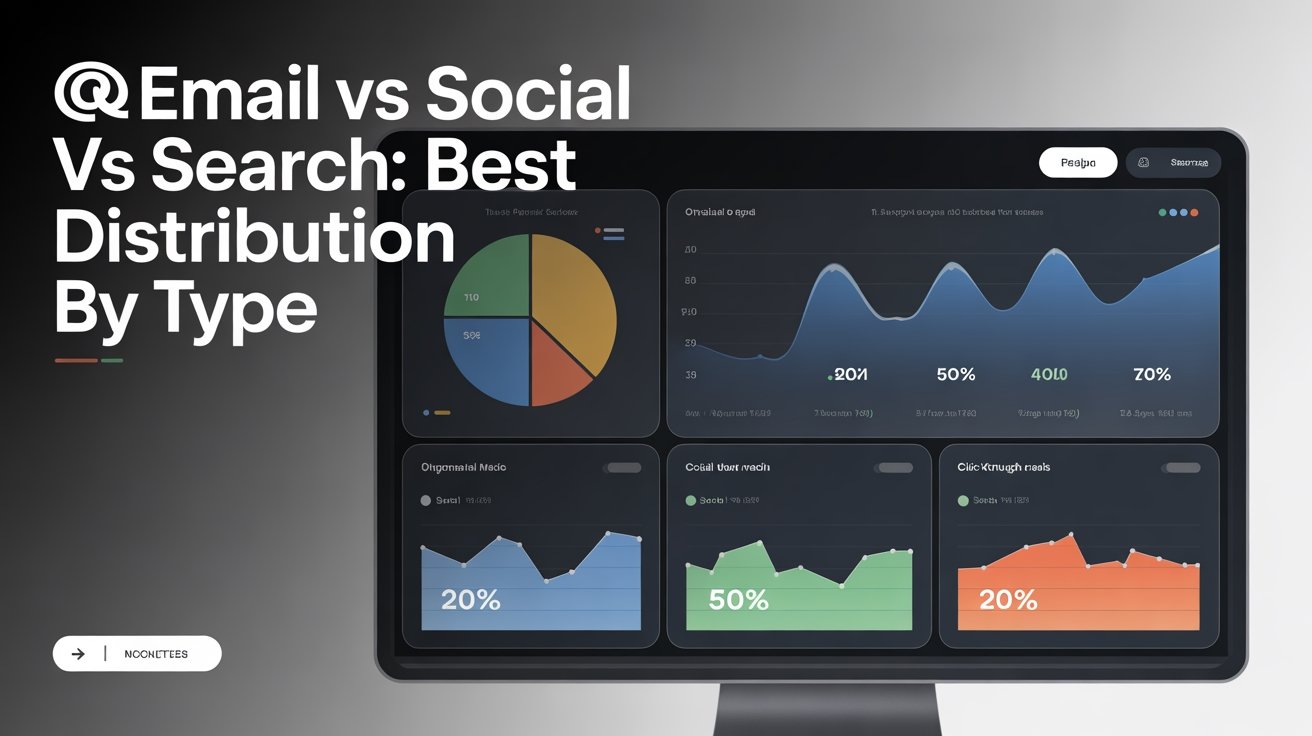


When deciding between email, social media, and search for distribution, consider your goals. Email marketing excels in personalization and direct engagement, making it ideal for nurturing relationships. Social media provides swift reach and dynamic interaction, perfect for broad awareness. Search engine optimization offers targeted visibility for those actively seeking your products. Each channel has strengths, so mixing strategies can maximize impact. Keep exploring to discover how to harness these tools effectively for your brand.
Table of Contents
Key Takeaways
- Email marketing excels in personalization and segmentation, enhancing engagement and fostering stronger connections with subscribers.
- Social media enables real-time engagement and broad audience reach, making it effective for dynamic interactions and brand visibility.
- Search engine optimization focuses on keyword research and content quality, driving organic traffic and improving visibility for targeted audiences.
- Each channel requires tailored content strategies, with emails favoring detailed information, social media thriving on visuals, and search prioritizing informative blog posts.
- Timing and frequency are crucial for all channels; mid-week emails and peak social media hours maximize audience engagement.
The Power of Email Marketing
While many marketing strategies vie for your attention, email marketing remains one of the most powerful tools at your disposal. One key aspect of its effectiveness is email personalization. By addressing your subscribers by name and tailoring content to their interests, you can greatly boost engagement rates.
Another vital element is email segmentation. By dividing your email list into targeted groups based on behaviors or preferences, you can send more relevant messages. This guarantees your audience feels valued and understood, leading to higher open and click-through rates.
Utilizing both email personalization and segmentation allows you to create a more impactful marketing strategy, fostering stronger connections with your audience. Embracing these techniques not only enhances your outreach but also supports informed decision-making in your overall marketing efforts.
Embrace these techniques, and watch your email campaigns thrive.
Advantages of Social Media Distribution
Social media gives you the chance to reach a broad audience quickly and effectively.
You can engage with your followers in real time, responding to their comments and questions instantly.
This dynamic interaction not only builds relationships but also enhances your brand’s visibility. Additionally, project management software can help streamline your campaigns for better results.
Broad Audience Reach
As you explore distribution methods, you’ll find that social media offers an unparalleled ability to reach a broad audience. This platform is perfect for broad audience segmentation, allowing you to connect with various demographics effortlessly.
By leveraging social media, you can implement diverse content strategies that resonate with different groups, making your message more impactful.
Consider these key advantages:
- Vast Reach: Tap into billions of active users across multiple platforms.
- Targeted Campaigns: Utilize data analytics to refine your audience segmentation.
- Engagement Opportunities: Foster community interactions that amplify your message.
With these tools at your disposal, social media becomes a powerful ally in expanding your brand’s visibility and influence.
Real-Time Engagement Opportunities
Engaging with your audience in real-time is one of the standout benefits of social media distribution. You can respond to comments, answer questions, and address concerns on the spot, fostering a stronger connection.
With social media, you gain access to real-time analytics, allowing you to track engagement metrics immediately. This data helps you understand what resonates with your audience, so you can adjust your strategies swiftly.
Instant feedback is another perk; your followers can share their opinions and reactions in the moment, providing invaluable insights. By leveraging these opportunities, you not only enhance your brand’s visibility but also build a loyal community that feels heard and valued.
Embrace social media’s dynamic nature for effective engagement strategies.
Search Engine Optimization: A Key Player
While you may be focused on social media and email marketing, search engine optimization (SEO) remains an essential element in driving organic traffic to your website.
By mastering SEO, you’ll enhance your visibility and attract the right audience. Here are three key components to evaluate:
- Keyword Research: Identify relevant keywords that your audience is searching for and integrate them strategically.
- On-Page Optimization: Optimize your website’s content, meta tags, and headings to improve search engine rankings.
- Content Quality: Create valuable, engaging content that addresses your audience’s needs and keeps them coming back.
Investing time in these areas won’t only boost your website’s performance but also complement your overall marketing strategy effectively. Additionally, understanding common error messages can help you troubleshoot issues that may arise during your SEO efforts.
Engagement Metrics: Comparing Email, Social, and Search
When it comes to measuring the effectiveness of your marketing efforts, understanding engagement metrics across email, social media, and search is essential.
Each channel offers unique insights into audience behavior, helping you refine your engagement strategies.
In email, open rates and click-through rates provide direct feedback on how well your content resonates.
Social media engagement can be gauged through likes, shares, and comments, reflecting the level of interaction you’re generating.
Meanwhile, search metrics like organic traffic and bounce rates reveal how effectively your content meets user intent. Additionally, leveraging analytics tools can further enhance your understanding of audience engagement and improve your strategies.
Audience Targeting: Email Vs Social Vs Search
Effective audience targeting is essential to maximizing the impact of your marketing campaigns, as each channel—email, social media, and search—offers distinct advantages.
To effectively reach your target audience, consider leveraging behavioral segmentation to tailor your messages and improve engagement.
- Email: You can send personalized messages based on past interactions, ensuring high relevancy.
- Social Media: Platforms allow you to target users based on interests and behaviors, enabling real-time engagement.
- Search: By optimizing for keywords, you can capture intent-driven traffic from users actively seeking information. Additionally, utilizing analytics capabilities can help you refine your strategies and enhance overall performance.
Cost-Effectiveness of Each Distribution Method
When considering cost-effectiveness, you’ll want to weigh the expenses of email marketing against the costs of social media and search advertising.
Each method has its own financial implications, and understanding these can help you allocate your budget wisely.
Let’s break down what you can expect to spend across these distribution channels. Additionally, it’s essential to recognize that common web error experience can affect your marketing strategy when users encounter issues finding your content online.
Email Marketing Expenses
Email marketing expenses can be surprisingly low compared to other distribution methods, making it an attractive option for businesses of all sizes.
By focusing on effective email segmentation strategies, you can maximize your return on investment. Here are a few reasons why email marketing can be cost-effective:
- Low upfront costs: Setting up an email campaign often requires minimal investment compared to other channels.
- Targeted reach: Well-segmented lists increase engagement and improve campaign performance analysis, driving better results.
- Automation: Many platforms offer automation tools that streamline your marketing efforts and reduce labor costs.
Social Media Costs
While social media can be a powerful tool for reaching your audience, the costs associated with it can vary widely depending on your strategy and goals.
If you’re considering social media advertising, it’s essential to assess your platform selection carefully. Different platforms have different advertising costs, and each one targets unique demographics. For instance, Facebook may offer cost-effective options for broad reach, while LinkedIn might be pricier but effective for B2B engagement.
Additionally, organic posts can incur little to no cost, but they often require consistent effort to maintain engagement. By balancing paid ads and organic strategies, you can optimize your budget while still effectively engaging your audience on social media.
Search Advertising Investment
Search advertising can be a highly effective way to reach potential customers actively seeking your products or services, often delivering a strong return on investment (ROI).
By aligning your advertising strategies with search trends, you can maximize your budget and enhance visibility.
Here are three key benefits of search advertising:
- Targeted Reach: You connect with users actively searching for your offerings, increasing the likelihood of conversion.
- Cost-Effectiveness: You only pay when users click on your ad, making it a budget-friendly option if managed well.
- Measurable Results: You can track performance metrics easily, allowing for data-driven adjustments to improve ROI.
Incorporating these elements into your marketing mix can elevate your overall strategy.
Content Types That Thrive on Each Platform
When you consider the diverse platforms available for content distribution, it’s clear that different types of content resonate more effectively with specific audiences.
For email, detailed guides, newsletters, and personalized offers thrive, as they cater to users who appreciate in-depth information.
On social media, eye-catching visuals, short videos, and engaging stories capture attention quickly, aligning with platform preferences for bite-sized content.
Meanwhile, search engines favor informative blog posts, how-to articles, and SEO-optimized content formats that answer user queries directly.
Understanding these distinctions helps you tailor your approach, ensuring your content not only reaches but also engages the right audience on each platform.
Embrace these insights to enhance your distribution strategy effectively.
Timing and Frequency: Best Practices
To maximize your content’s impact, it’s crucial to contemplate not just what you share but also when and how often you share it.
Implementing ideal timing and frequency strategies can greatly enhance engagement.
Here are some best practices to keep in mind:
- Email: Send emails mid-week during the late morning or early afternoon for higher open rates.
- Social Media: Post during peak hours, typically weekdays between 11 AM and 1 PM, to reach more users.
- Search Content: Update your content regularly to keep it relevant and boost its visibility in search results.
Measuring Success: Tools and Techniques
While you might’ve a solid strategy in place for your content distribution, measuring success is just as vital to guarantee you’re on the right track.
To effectively assess your efforts, use success metrics that align with your goals. Tracking tools like Google Analytics or social media insights can provide valuable data on performance analysis.
Focus on key indicators such as conversion rates to gauge audience engagement and campaign effectiveness. By diving into audience insights, you can identify trends and preferences that inform your future strategies.
This data not only helps in understanding what works but also aids in campaign optimization.
Ultimately, regularly reviewing these metrics guarantees you adapt and refine your approach for maximum impact.
Integrating Email, Social, and Search for Maximum Impact
Integrating email, social media, and search strategies can greatly amplify your marketing efforts, as each channel complements the others in unique ways.
By leveraging email integration with social synergy, you can create a cohesive marketing approach that drives better results.
- Use social platforms to promote your email campaigns, increasing visibility and sign-ups.
- Share engaging content from your email newsletters on social media to reach a broader audience.
- Optimize your email content with keywords that align with your search strategy to enhance discoverability.
This interconnected approach not only strengthens your brand presence but also fosters deeper engagement.
Frequently Asked Questions
What Are the Best Tools for Managing Email Campaigns?
To manage email campaigns effectively, use tools like Mailchimp or HubSpot for email automation and campaign analytics. They simplify scheduling, tracking performance, and optimizing your strategy, ensuring you engage your audience efficiently and effectively.
How Can I Increase My Social Media Followers Quickly?
To quickly increase your social media followers, create engaging content that resonates with your audience and collaborate with influencers. Their reach can amplify your message, attracting new followers who share your interests and values.
What Role Does Mobile Optimization Play in Search Engine Rankings?
Mobile optimization plays an essential role in search rankings. If your site’s mobile responsiveness is poor, users’ll have a bad experience, leading to higher bounce rates. Prioritize mobile design to improve visibility and user satisfaction.
Can I Use the Same Content Across All Distribution Channels?
Absolutely, you can use the same content across channels, but it’s like wearing the same outfit to every event. Employ content repurposing strategies and audience segmentation techniques to tailor your message for maximum impact.
How Often Should I Update My Email Subscriber List?
You should update your email subscriber list regularly, ideally every six months. Use email segmentation strategies to tailor content and apply subscriber engagement techniques to keep your audience interested and improve overall campaign effectiveness.
Conclusion
In the vibrant landscape of digital marketing, each channel—email, social media, and search—shines like a unique star. By weaving them together, you create a tapestry of engagement that captivates your audience. Picture your content soaring through inboxes, sparking conversations on social feeds, and climbing search rankings. Embrace the strengths of each platform, and watch your message take flight, reaching hearts and minds like a colorful kite dancing in the sky. It’s time to ignite your strategy!